

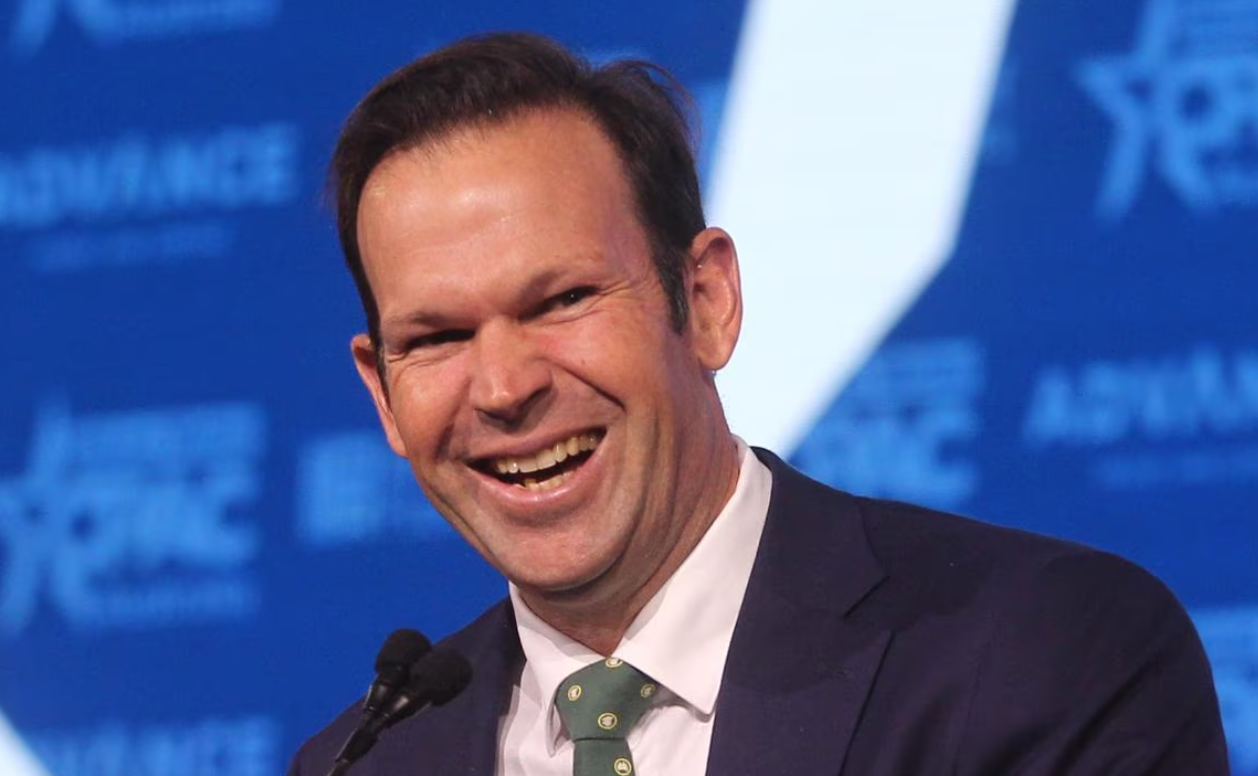
From Economics to Federal Politics
Matt Canavan has developed a reputation as one of the more outspoken figures in Australian conservative politics. His career combines an academic and professional background in economics with a political identity strongly connected to regional Queensland, resources, agriculture and debates about Australia’s energy future.
Born in Southport, Queensland, on December 17, 1980, Canavan studied arts and economics at the University of Queensland. Before entering parliament, he worked as an economist, including at the Productivity Commission, and later worked closely with Barnaby Joyce.
That economic background remains visible in his political communication. Canavan frequently frames arguments around jobs, industrial development, regional investment and the economic consequences of government policy.
He was elected to the Senate at the 2013 federal election and began his term representing Queensland in 2014. Over the following decade, he became one of the Nationals’ most recognizable federal politicians.
Central Queensland and Regional Political Identity
Canavan’s political identity is closely connected with regional Queensland. He relocated with his family to Central Queensland and established an office in Rockhampton, emphasizing his representation of communities outside Brisbane and Australia’s other major metropolitan centres.
This regional focus is important to understanding his politics. The Nationals traditionally seek to represent agricultural communities, regional industries and smaller towns, while Queensland’s economy has a particularly strong relationship with mining and resources.
Canavan has consistently argued that policies developed in major cities can impose costs on communities whose economies depend on industries such as coal, gas, agriculture and manufacturing.
Whether supporters or opponents agree with those arguments, they have provided him with a highly recognizable political position.
Resources and Northern Australia
Canavan’s background and regional focus made resources and Northern Australia natural areas for his ministerial career.
He served in ministerial roles connected with Northern Australia and resources during the Coalition governments of Malcolm Turnbull and Scott Morrison. His responsibilities placed him at the centre of debates about mining investment, energy production, infrastructure and economic development across northern parts of the country.
Energy policy became one of the subjects most closely associated with his public profile. Canavan has been a vocal defender of Australia’s resources sector and has frequently challenged policies he believes would accelerate the decline of coal and other traditional energy industries.
These positions have made him popular with some regional and conservative audiences while attracting strong criticism from environmental organizations and political opponents.
The 2017 Citizenship Controversy
One of the most dramatic periods of Canavan’s early political career came during Australia’s parliamentary citizenship crisis in 2017.
Questions emerged over whether he might possess Italian citizenship by descent. Section 44 of the Australian Constitution places restrictions on parliamentarians who hold allegiance to a foreign power, and citizenship questions affected numerous federal politicians during this period.
Canavan temporarily resigned from cabinet while the matter was examined. The High Court ultimately found that he was not disqualified, allowing him to remain in parliament and later return to ministerial responsibilities.
Canavan himself later described the episode as a moment when his political career nearly ended before it had properly developed.
A Politician Comfortable With Controversy
Canavan has rarely attempted to present himself as a cautious political centrist. His public profile has instead been strengthened by taking clear positions on divisive issues.
Climate policy, coal, nuclear energy, regional development and the direction of the Nationals have all provided opportunities for him to distinguish himself from both Labor and more moderate elements of Australian politics.
This approach works particularly well in contemporary media. Television panels, radio interviews and social platforms reward politicians who can communicate a clear argument quickly. Canavan’s direct style therefore gives him visibility beyond what might traditionally be expected for a senator representing a smaller coalition party.
The same style inevitably produces criticism. Opponents accuse him of resisting climate action or defending fossil-fuel industries too aggressively. Supporters argue that he raises economic consequences and regional concerns they believe metropolitan politicians underestimate.
Internal Nationals Politics
Canavan’s career has also been shaped by internal debates within the National Party. The party contains competing views about leadership, climate policy and how closely it should align with the Liberal Party.
In 2020, Canavan resigned from cabinet in order to support Barnaby Joyce during a Nationals leadership contest. The decision demonstrated both his loyalty to Joyce and his willingness to sacrifice a ministerial position during an internal political battle.
Following the 2025 federal election, Canavan again became involved in the contest over the party’s direction. By 2026 his position had changed dramatically: he became leader of the National Party in March 2026, succeeding David Littleproud.
That leadership role gives Canavan greater responsibility than he held as an outspoken individual senator. A party leader must not only communicate personal positions but balance competing interests across MPs, senators, states and regional constituencies.
Energy as a Defining Political Battle
Few subjects define Canavan’s political brand as strongly as energy.
Australia is one of the world’s major energy exporters while simultaneously undergoing a domestic transition toward lower-emissions electricity generation. This creates complicated debates about reliability, consumer prices, industrial competitiveness, climate targets and employment.
Canavan has repeatedly emphasized the continued economic importance of traditional resources. He has also been a prominent participant in debates around nuclear power and Australia’s long-term electricity mix.
These issues are unlikely to disappear. Electricity demand, renewable infrastructure, transmission projects and the future of coal-fired generation will remain central political questions for years.
That means Canavan’s long-standing focus on energy places him directly inside one of Australia’s most consequential policy debates.
Matt Canavan’s Broader Political Significance
Canavan represents a particular strand of Australian conservatism: economically focused, regionally based, skeptical of some climate-policy approaches and strongly supportive of resource development.
His rise from economist to senator, cabinet minister and ultimately Nationals leader illustrates how a politician can build influence through specialization combined with a distinctive media presence.
His supporters see a politician willing to defend industries and communities that they believe are ignored by metropolitan decision-makers. His critics see a figure whose positions risk slowing Australia’s response to climate change and economic transition.
That disagreement is precisely why Canavan remains politically relevant. He occupies the centre of debates that involve fundamental questions about what kind of economy Australia should have, where its energy should come from and how the costs of transition should be distributed between cities and regional communities.
As leader of the Nationals in 2026, those arguments are no longer simply part of Matt Canavan’s personal political brand. They are increasingly connected to the future direction of his party.