

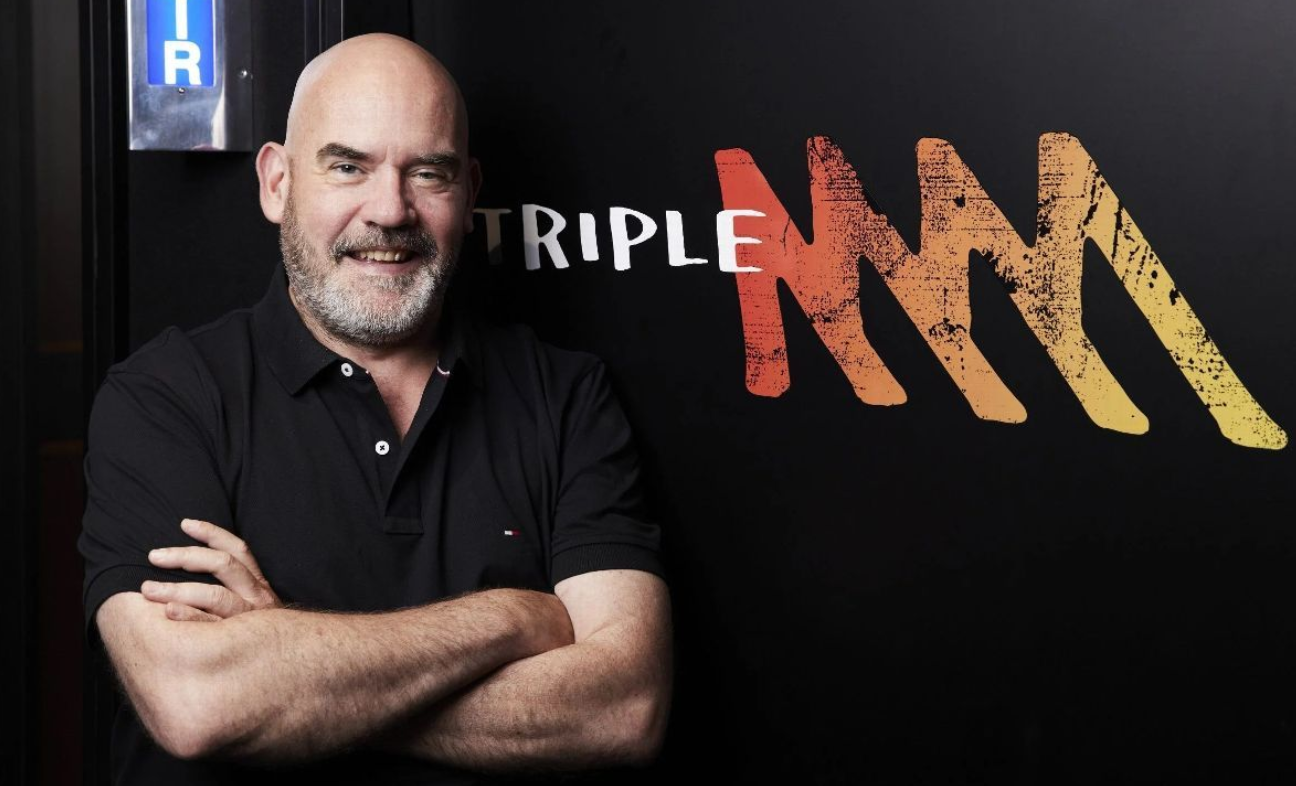
A Distinctive Voice in Australian Comedy
Marty Sheargold has spent decades developing one of the most recognizable personalities in Australian comedy and radio. His style is difficult to separate from the persona audiences know: dry, impatient, observational and frequently willing to say what a more polished presenter might leave unsaid.
Born Martin Donald Sheargold in Nowra, New South Wales, on June 19, 1971, he attended Daramalan College in Canberra before eventually pursuing comedy and entertainment.
Unlike performers whose careers are built around a single television role, Sheargold has moved repeatedly between stand-up comedy, acting and commercial radio. Each medium has highlighted a different part of his personality while reinforcing the same central appeal: an ability to turn frustration, social awkwardness and ordinary observations into comedy.
Building a Career in Stand-Up
Stand-up comedy forms the foundation of Sheargold’s professional identity. Long before radio made his voice familiar to daily commuters, he developed the ability to hold an audience with little more than a microphone and a point of view.
His comedy often draws from everyday life rather than elaborate fictional premises. Family, ageing, social behavior and the minor frustrations of ordinary existence can become material. The humor frequently comes from exaggerating a recognizable irritation until it becomes absurd.
That approach requires timing and confidence. Observational comedy succeeds only when an audience recognizes enough truth in the premise to follow the performer into the exaggeration.
Sheargold’s stage persona often appears irritated by the world around him, but that irritation functions as a comedic device. The audience is invited to recognize its own frustrations in his complaints.
Acting and Television
Sheargold has also worked extensively as an actor and television performer. One of his best-known acting roles came through the Australian comedy-drama The Librarians, in which he appeared as Shane Dunne.
Acting provided another outlet for the same understated comedic instincts that characterized his stand-up work. Rather than relying exclusively on traditional punchlines, Sheargold could use timing, expression and character interaction.
He also appeared across other Australian television productions, gradually building a career that was recognizable even before commercial radio made him a daily presence for a much larger audience.
This versatility is important because radio personalities can sometimes become trapped by the format that makes them famous. Sheargold had an established comedy career outside radio, giving him the ability to move between platforms.
Radio and the Chemistry of a Successful Team
Commercial radio significantly expanded Sheargold’s national profile. He became part of successful programs including Meshel, Tim and Marty and later Kate, Tim & Marty on Nova.
Radio ensemble programs depend heavily on chemistry. The audience is not simply listening for information; it develops familiarity with the relationships between presenters. Recurring jokes, disagreements and spontaneous reactions become part of the attraction.
Sheargold’s dry delivery provided a useful contrast with the personalities around him. He could appear unimpressed or cynical while still contributing to a warm and entertaining group dynamic.
The success of these programs established him as one of Australia’s prominent FM radio personalities and demonstrated that his comedic instincts could work within the fast, highly structured environment of commercial broadcasting.
The Marty Sheargold Show
Eventually Sheargold moved into a program built explicitly around his own name and personality: The Marty Sheargold Show.
Hosting a show under one’s own name changes the level of responsibility. In an ensemble, a presenter can react to other personalities; as the central figure, the host’s worldview becomes one of the main products being offered to listeners.
The format gave Sheargold greater opportunity to extend the style audiences already associated with him. Everyday complaints, news stories, personal observations and interactions with colleagues could all become material.
His radio persona benefited from the intimacy of the medium. Listeners often encounter breakfast or drive-time presenters every weekday, creating a sense of familiarity very different from watching a comedian perform a one-hour stand-up special once a year.
The Risks of Unfiltered Comedy
The qualities that can make a comedian compelling can also create problems when transferred into daily broadcasting. Stand-up traditionally allows performers considerable freedom to test provocative ideas within a comedic context. Commercial radio, by contrast, operates under different expectations involving advertisers, employers, colleagues and a broad general audience.
Sheargold’s career has illustrated this tension. His willingness to push a joke or express an opinion without excessive filtering has been central to his appeal, but controversial comments have also attracted significant public criticism.
This raises a broader question that extends beyond one performer: how should comedians adapt when humor created for a club or theatre exists within mass media? Context that may be obvious to an audience attending a stand-up performance can be lost when a short extract is circulated online.
At the same time, describing every controversy simply as a misunderstanding of comedy would be too simplistic. Public broadcasters and performers operate within professional environments, and audiences are free to judge whether particular comments cross a line.
For a comedian whose brand depends partly on irreverence, navigating that boundary is particularly difficult.
Stand-Up as the Constant Throughout His Career
Despite the enormous visibility provided by radio, live comedy has remained an important part of Sheargold’s professional identity.
A theatre audience is fundamentally different from a radio audience. People purchasing tickets for a comedian generally understand the performer’s style and arrive expecting provocative or exaggerated material. This gives stand-up greater room for experimentation.
It also provides immediate feedback. A joke either connects with the room or it does not. For experienced comedians, that relationship with a live audience can remain creatively important even after television and radio provide greater fame.
Sheargold’s ability to return repeatedly to touring and live performance demonstrates that he has never been solely dependent on broadcasting.
Why His Style Became So Recognizable
Many successful broadcasters are energetic and relentlessly positive. Sheargold built much of his identity around almost the opposite approach.
His comedic character can sound tired of unnecessary enthusiasm, suspicious of social conventions and irritated by the minor inconveniences everyone else has learned to tolerate. The result is a kind of exaggerated everyday cynicism.
The effectiveness comes from recognition. Most people have experienced moments when a trivial inconvenience feels absurdly frustrating. Sheargold takes that internal reaction and says it aloud.
His delivery is equally important. A line that might appear ordinary on paper can become funny because of the pause before it, the tone of resignation or the contrast between a relatively minor problem and the seriousness with which it is described.
A Career Across Changing Media
Sheargold’s career has unfolded during a period when Australian entertainment has changed dramatically. Traditional television and FM radio once dominated mass entertainment, while contemporary performers must also exist in a world of podcasts, streaming and social-media clips.
Comedy has been particularly affected. A routine that once disappeared after a live performance can now be recorded, clipped and distributed to millions of people without its original context.
At the same time, comedians have more opportunities to communicate directly with audiences and build careers outside conventional networks.
For performers from Sheargold’s generation, adapting to this environment means balancing the instincts developed in traditional media with the realities of a much faster and more fragmented public conversation.
Marty Sheargold’s Place in Australian Entertainment
Marty Sheargold’s longevity comes from the fact that he is not easily confined to one professional category. He is a stand-up comedian, but he has also been an actor. He became a major radio personality without abandoning live performance.
His career has included major successes as well as periods of controversy, and both are relevant to understanding his public profile. The same willingness to speak freely that helped create his distinctive comedic voice can produce unpredictable consequences when delivered to a mass audience.
Yet recognizability is one of the most difficult things to achieve in entertainment. Audiences can hear only a few sentences from Sheargold and immediately understand the persona behind them.
After decades in Australian comedy and broadcasting, that voice remains his defining professional asset. Whether on a theatre stage, behind a radio microphone or appearing on television, Marty Sheargold has built a career around turning an unmistakably personal way of looking at everyday life into entertainment.