

From Taxi Driver to One of Australia’s Best-Known Broadcasters
Ray Hadley’s career is one of the more unusual success stories in Australian broadcasting. Long before he became one of the country’s most recognizable radio voices, Hadley was working as a taxi driver in Sydney. His path into broadcasting did not follow the traditional route through journalism school or an established media career. Instead, an unexpected encounter helped open the door to radio and ultimately led to a career spanning more than four decades.
Born Raymond Morris Hadley in Sydney in 1954, he spent part of his childhood in New South Wales and entered working life without any obvious indication that he would eventually become a major media personality. While driving a taxi, Hadley reportedly impressed a 2UE news executive who happened to be one of his passengers. That encounter contributed to Hadley receiving an opportunity to work in radio, beginning a professional journey that would eventually make him a dominant figure in Sydney talkback broadcasting.
Hadley quickly demonstrated that he possessed qualities particularly suited to live radio. He could speak directly to listeners, react rapidly to developing stories and maintain a strong personality on air. Rather than adopting a detached broadcasting style, he made his opinions an important part of his professional identity. For supporters, that directness made him authentic and entertaining. For critics, it could make his programs confrontational. Either way, it ensured that Hadley was rarely ignored.
The Rise of a Talkback Radio Powerhouse
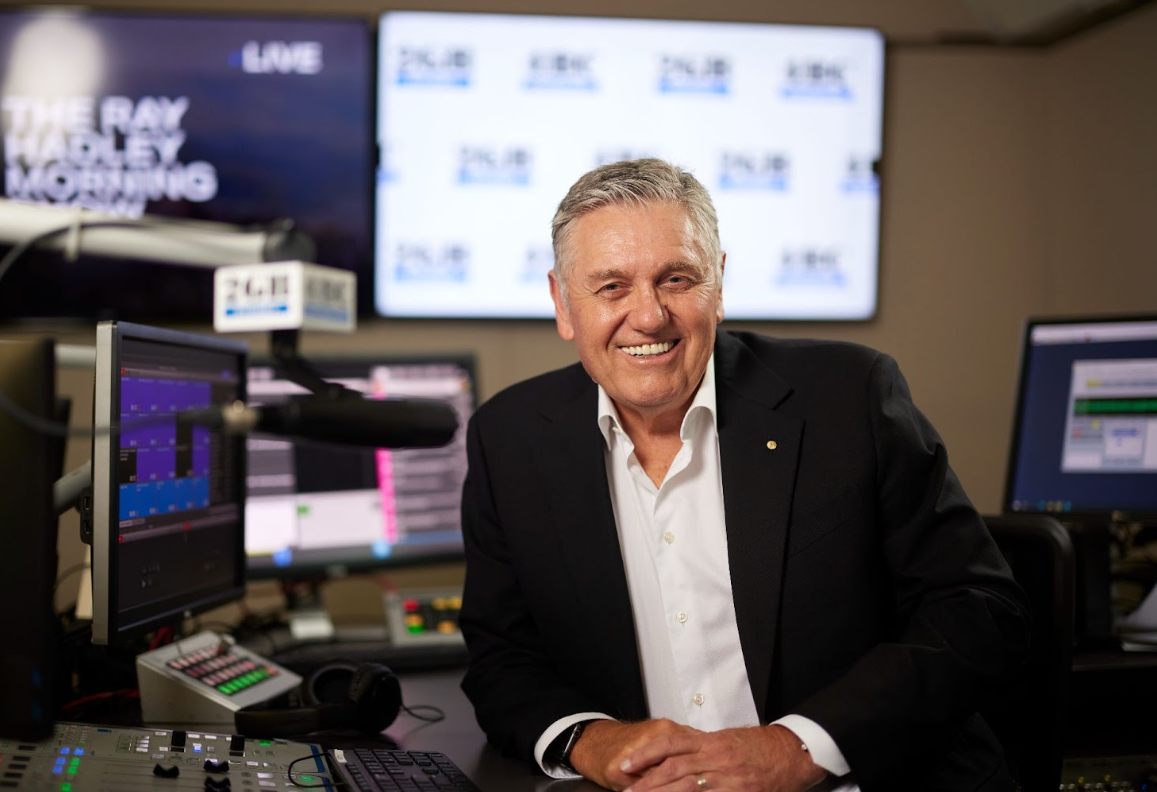
Hadley’s eventual association with Sydney station 2GB became the defining professional relationship of his career. His weekday morning program developed a large and extremely loyal audience, while his voice became familiar far beyond Sydney through syndication to stations in other parts of Australia.
Talkback radio occupies a distinctive position in Australian media. Unlike a conventional news bulletin, it allows listeners to participate directly in conversations about politics, crime, infrastructure, cost-of-living pressures and everyday community issues. Successful presenters therefore need to combine journalism, entertainment and audience management. Hadley developed a particularly forceful version of this formula.
His program could move rapidly from a major political controversy to a complaint from an individual listener. That ability to connect national issues with everyday experiences was an important part of the show’s appeal. Listeners did not simply hear Hadley discussing politicians or institutions; they could call the program and become part of the discussion themselves.
The ratings demonstrated the extraordinary strength of the formula. By the time he announced his departure, Hadley’s morning program had won its Sydney ratings slot 160 consecutive times over roughly two decades, an exceptional achievement in Australian commercial radio.
Rugby League and a Second Broadcasting Identity
Hadley’s influence was never restricted to political talkback. Rugby league became another major component of his broadcasting identity, and his work as a commentator allowed him to reach an audience that might not necessarily have followed his weekday current-affairs program.
Through the Continuous Call Team and other rugby league coverage, Hadley became closely associated with one of Australia’s most popular sporting codes. Sports commentary requires a very different rhythm from talk radio: events happen in real time, and a broadcaster must describe action quickly while maintaining excitement and clarity. Hadley’s ability to operate successfully in both formats demonstrated the versatility that helped sustain his career.
The combination of sport and talkback also reinforced his connection with audiences in New South Wales and Queensland, where rugby league has enormous cultural importance. For many listeners, Hadley was therefore not simply a political commentator or morning presenter. His voice was also associated with weekends, football and major sporting moments.
A Broadcaster Who Never Tried to Be Neutral in Personality
Hadley’s broadcasting style was built around certainty and directness. He frequently expressed strong opinions and challenged politicians, officials and other public figures. This could create compelling radio, particularly when an interview became confrontational.
That style also made him controversial. Over a career lasting decades, Hadley attracted criticism for various comments, interviews and workplace issues. His approach reflected a tradition of Australian talkback radio in which the presenter is not merely a neutral moderator but a central personality whose opinions are one of the main reasons audiences listen.
The result was a highly polarized public image. Loyal listeners appreciated what they saw as his willingness to say things more cautious broadcasters would avoid. Critics viewed the same behavior as unnecessarily aggressive. The tension between those interpretations followed Hadley throughout much of his career.
Yet from a purely broadcasting perspective, the strategy created remarkable audience loyalty. Listeners knew what kind of personality they would encounter when they turned on the program, and that consistency helped turn his name into a recognizable media brand.
Country Music and Interests Beyond Talkback
Another significant but sometimes overlooked part of Hadley’s broadcasting career was his support for Australian country music. His Ray Hadley Country Music Countdown ran for hundreds of episodes and provided another outlet through which he could communicate with audiences.
By the time he announced his retirement, the program had run for 573 episodes over 16 years, and Hadley had also received recognition for his contribution to Australian country music.
This part of his career illustrates why describing Hadley simply as a political talkback host does not fully capture his professional range. Rugby league, current affairs and country music each attracted different audiences, and he managed to establish credibility across all three areas.
The Decision to Leave Daily Radio
In November 2024, Hadley announced that he would step away from his daily 2GB program. His final morning broadcast took place on December 13, ending an extraordinary period in Australian commercial radio. His departure was especially notable because he had remained highly successful in the ratings and had been expected to continue broadcasting.
The announcement arrived during a broader period of generational change in Sydney radio. Several veteran broadcasters were leaving long-running programs, raising questions about whether traditional personality-driven talkback could maintain the same influence as audiences increasingly moved toward podcasts, streaming platforms and social media.
For Hadley, however, the departure represented more than a change in media technology. After spending decades working according to the relentless schedule of daily radio, retirement offered the possibility of devoting more time to his personal life and family.
In 2025, Hadley publicly discussed how his granddaughter Lola’s leukemia diagnosis had dramatically changed his priorities. Broadcasting projects that might once have seemed important became secondary as his family became his central focus.
Ray Hadley’s Place in Australian Broadcasting
Few Australian radio presenters have maintained the combination of longevity, audience loyalty and public visibility achieved by Ray Hadley. His career stretched across enormous technological changes, from an era dominated by traditional AM radio to a media environment of podcasts, digital streaming and social networks.
His importance does not depend on everyone agreeing with him. In fact, disagreement was often central to the type of radio he produced. Hadley built a career around personality, immediacy and the belief that radio should sound like a direct conversation rather than a carefully polished institutional statement.
For decades, millions of Australians knew exactly what to expect when they heard his voice. That familiarity, combined with extraordinary ratings success, rugby league commentary and a willingness to engage directly with controversial subjects, made Ray Hadley one of the defining personalities of modern Australian talk radio.