

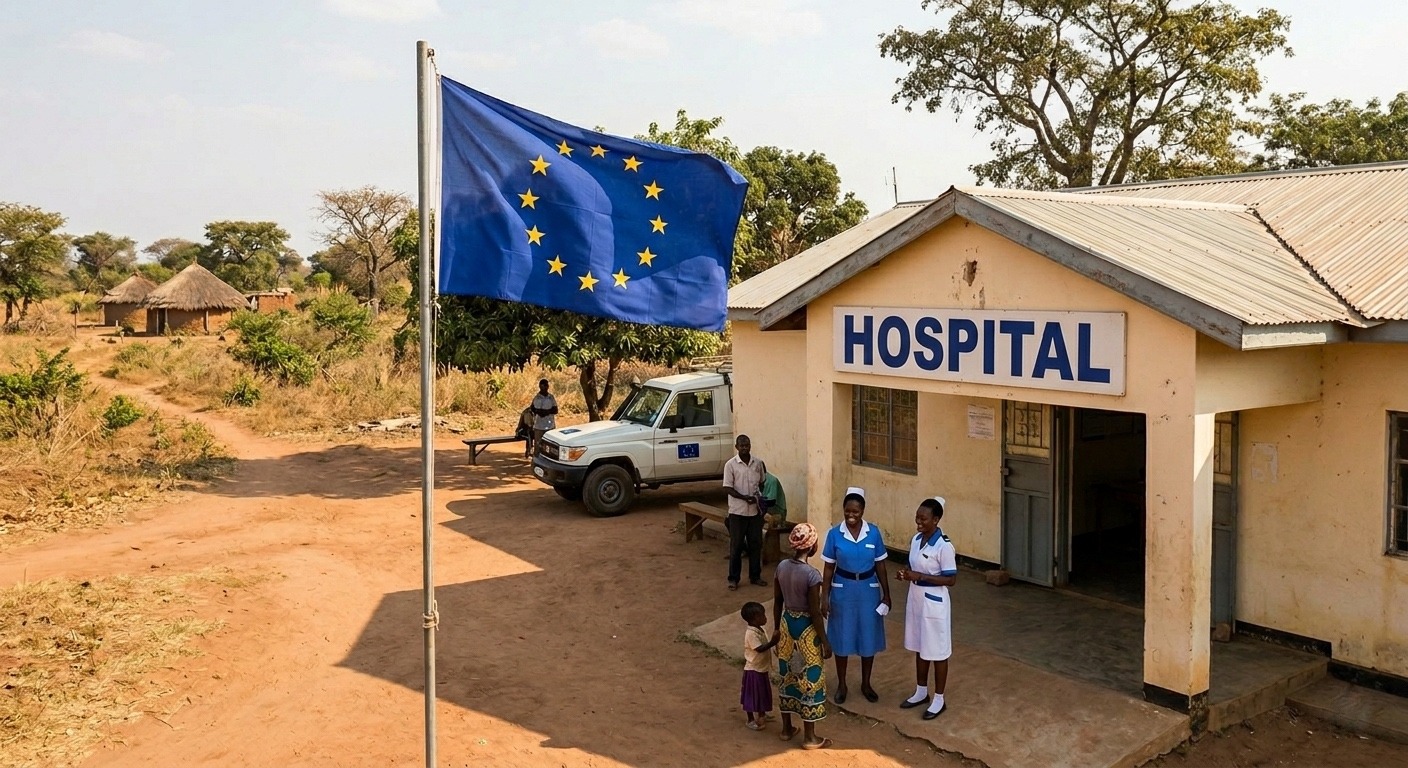
Not Just About Africa
The recent decision by the European Union to allocate €100 million to healthcare projects in Africa is being presented as a humanitarian initiative. But beneath the surface, it reflects a deeper and more complex reality: a shift in budget priorities and a broader decline in global aid flows that directly affects Europe itself.
This is not only a story about international support—it is a story about how European money is being redistributed at a time when resources are becoming more limited.
Shrinking Budgets, Growing Questions
Across Europe, governments are facing increasing fiscal pressure. Slower economic growth, inflation, and rising public spending have forced policymakers to make difficult budget decisions.
At the same time:
- Overall global aid is declining
- Domestic financial pressures are increasing
- External commitments remain politically sensitive
In this environment, every euro allocated outside the EU becomes more visible—and more debated.
For many European citizens, the key question is simple:
“What happens to my taxes and my income?”
The Economic Ripple Effect
When funds are directed toward external projects, even for humanitarian purposes, there are internal consequences.
Budget redistribution can lead to:
- Reduced funding for domestic programs
- Increased pressure on public finances
- Political debates over spending priorities
While €100 million may seem relatively small in the context of the EU’s overall budget, it symbolizes a broader trend—one where financial resources are increasingly stretched across competing priorities.
A Changing Global Aid Landscape
The EU’s move comes at a time when traditional models of global assistance are shifting. Many countries are scaling back their contributions, focusing more on internal economic stability.
This creates a paradox:
- Global needs are rising
- Available funding is shrinking
- Strategic allocation becomes more critical
In response, the European Union is not necessarily increasing overall spending, but rather reallocating it—choosing where funds can have both humanitarian and strategic impact.
Public Perception and Political Risk
Economic decisions are not made in isolation—they shape public opinion.
As external spending becomes more visible, it can influence:
- Voter sentiment
- Trust in institutions
- Political stability within member states
If citizens begin to feel that their financial well-being is being affected by external commitments, it can lead to increased skepticism toward EU policies.
Beyond Humanitarian Goals
While the funding for healthcare in Africa addresses real and urgent needs, it also reflects broader strategic considerations:
- Maintaining global influence
- Strengthening international partnerships
- Preventing future economic and migration pressures
However, these long-term benefits are often less visible to the public than immediate economic concerns.
Conclusion: A Financial Balancing Act
The €100 million allocation is not just about aid—it is about priorities.
The European Union is navigating a delicate balance between global responsibility and domestic expectations. As budgets tighten and economic uncertainty grows, decisions like this become increasingly significant.
For European citizens, the issue is no longer distant or abstract.
It is personal.
Because in today’s economic reality, every external investment raises the same underlying question:
Who ultimately pays the price—and who benefits?